Solar Panel Roof Clearance: What Homeowners Must Know
Solar Panel Roof Clearance: What Homeowners Must Know
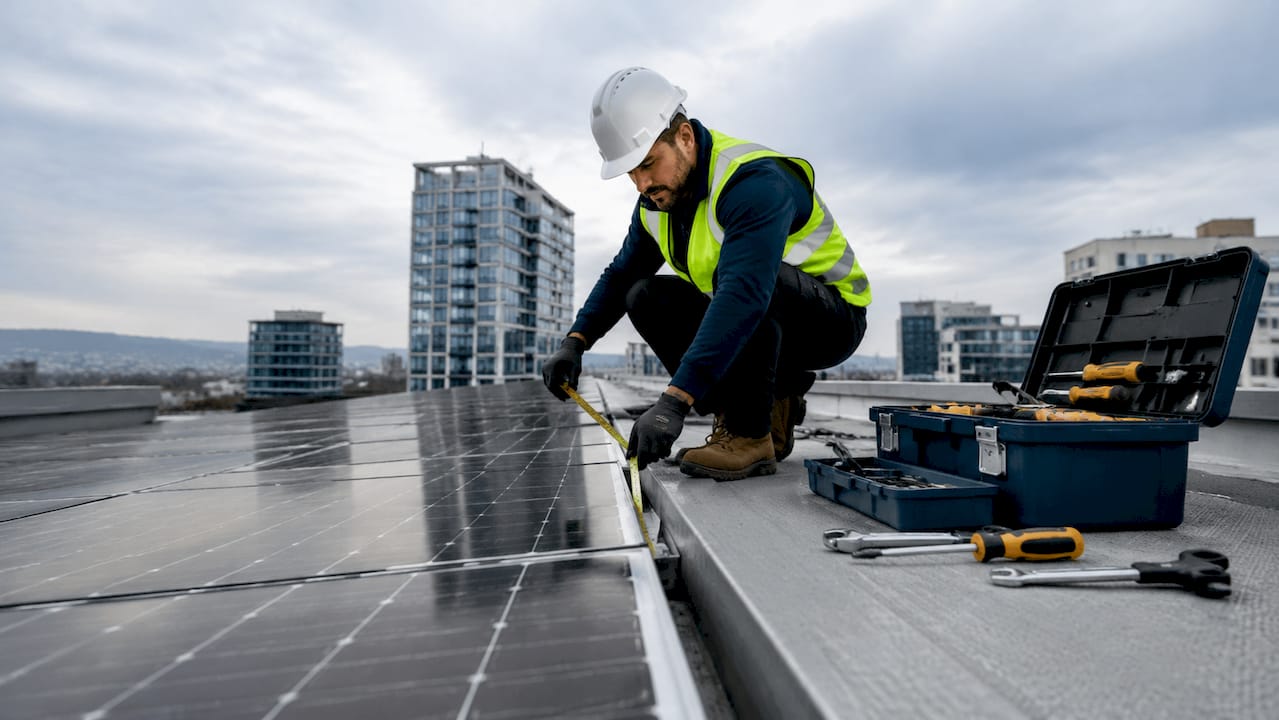
Solar panel roof clearance is the mandated space between your solar array and roof edges, ridges, hips, valleys, and other features required by fire safety codes, electrical standards, and local permitting authorities. Most homeowners don’t realize these setbacks directly control how many panels fit on their roof. Get them wrong and your permit gets rejected. Get them right and your system is safer, more efficient, and easier to maintain for decades. The core rules come from IFC 605.11, NFPA 1, and IRC R324.6.2, with numbers ranging from 18 to 36 inches depending on your roof coverage and jurisdiction.
What is solar panel roof clearance and why does it matter?
Solar panel roof clearance refers to the required setback distances that keep portions of your roof free of panels. These aren’t suggestions. They are hard constraints enforced at the permit stage, and many homeowners assume they are flexible guidelines until a permit gets rejected.
The three core reasons for these clearances are firefighter access, roof ventilation, and maintenance. Firefighters need clear pathways to move across your roof, cut ventilation holes, and escape safely during a fire. Without those pathways, a rooftop solar array can trap heat and smoke underneath, making a bad situation worse.
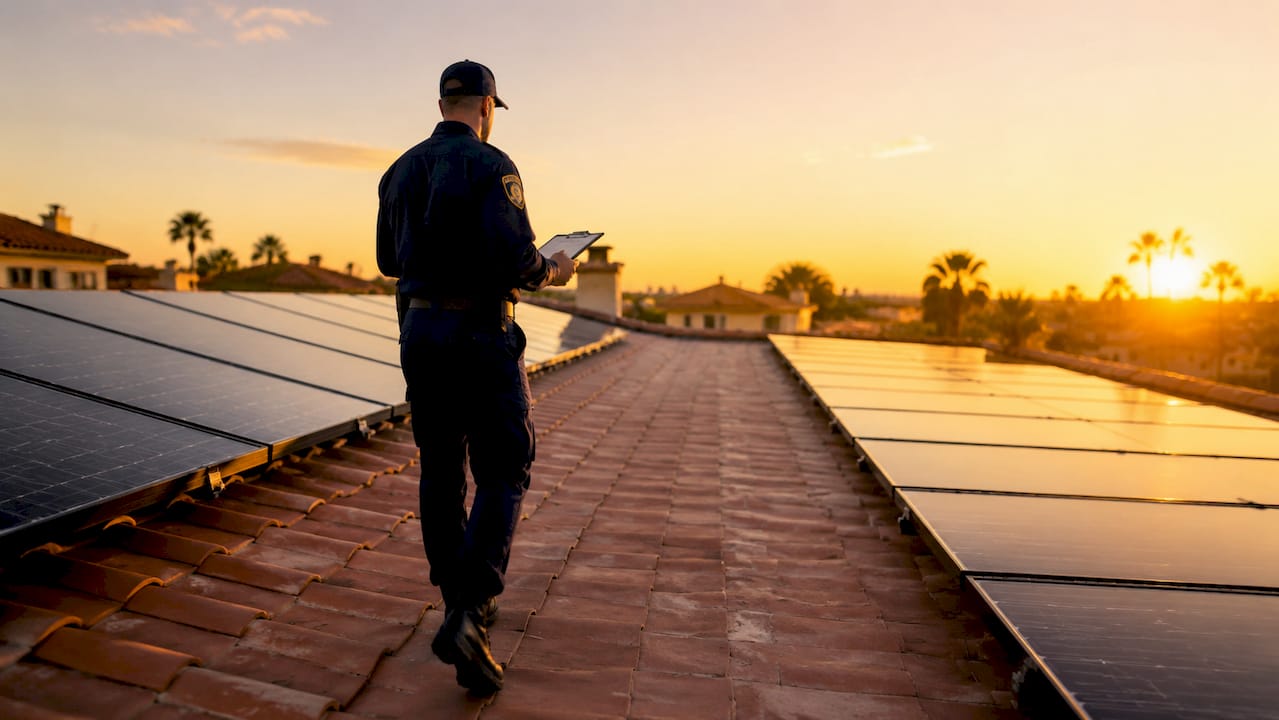
Clearances also affect your system size directly. Setback requirements can reduce usable roof area by 15–30%, which is why early planning matters more than most installers tell you. A roof that looks large enough for 20 panels may realistically fit 14 once all required setbacks are drawn in.
What are the standard clearance requirements for residential solar?
The most widely adopted standards come from IFC 605.11 and IRC R324.6.2. Here is how the numbers break down for a typical residential roof:
- Ridge setback: 18 inches when your panel array covers 33% or less of the total roof plan area. The required ridge setback doubles to 36 inches when coverage exceeds 33%. That threshold matters enormously for system sizing.
- Firefighter access pathways: At least 36 inches wide, continuous from the lowest roof edge up to the ridge. Most jurisdictions require at least two of these pathways per building.
- Hip and valley setbacks: Typically 18 inches on each side when arrays exist on both sides of the hip or valley.
- Eave setbacks: Generally 36 inches from the eave unless alternate pathways are provided.
| Clearance Zone | Standard Minimum | Condition |
|---|---|---|
| Ridge (low coverage) | 18 inches | Array covers ≤33% of roof plan |
| Ridge (high coverage) | 36 inches | Array covers >33% of roof plan |
| Firefighter pathway | 36 inches wide | Continuous from eave to ridge |
| Hip or valley | 18 inches | Arrays on both sides |
| Eave | 36 inches | Without alternate pathways |
These numbers come from IFC 605.11 setback zones, which define the full framework for residential PV installations. Your local authority having jurisdiction (AHJ) may tighten these numbers or add requirements, so always confirm before finalizing your design.
Pro Tip: Calculate your panel plan-view coverage percentage before you finalize your layout. Crossing the 33% threshold forces a larger ridge setback and can require a complete redesign. Catching this early saves weeks of permit delays.
How do fire safety codes shape solar roof setback rules?
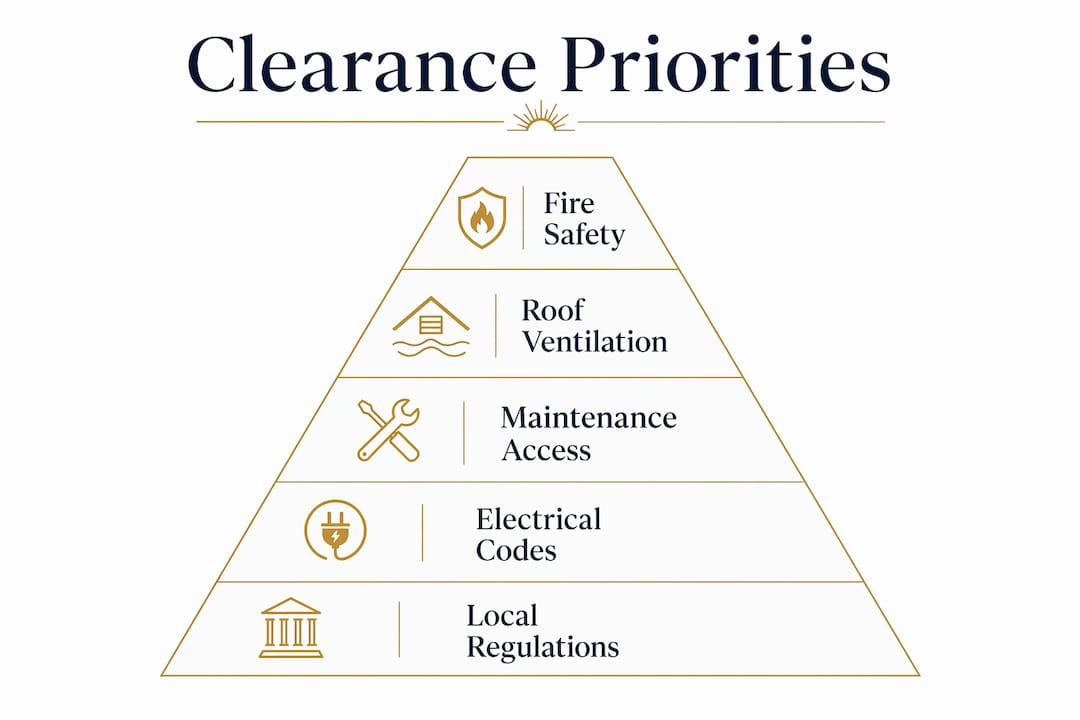
Setback distances exist primarily to preserve firefighter ventilation and movement, not simply to space out panels. That distinction changes how you think about the rules. Every clear zone on your roof is a working tool for emergency responders.
IFC 605.11 is the national baseline. It specifies ridge setbacks, eave setbacks, and the width of firefighter access pathways. NFPA 1 reinforces these requirements and addresses smoke ventilation zones. When panels cover too much of a roof without clearance, fire can spread beneath them while firefighters lose the ability to cut ventilation openings safely.
“Setback distances primarily exist to preserve firefighter ventilation and movement, not just for panel fitment, so clearance depends on fire safety risk assessment.” — SurgePV Solar Fire Safety Research
California adds another layer on top of the national baseline. California’s Title 24 requires additional roof pathways and clearances beyond what IFC mandates, driven by the state’s elevated wildfire risk. San Diego County homeowners face some of the most specific local amendments in the country, particularly in high fire hazard severity zones covering communities like Rancho Santa Fe, Poway, and Scripps Ranch.
The practical impact is real. A layout that passes in Phoenix may fail in San Diego. Local fire departments and building departments sometimes add requirements that go beyond both IFC and Title 24. Checking with your AHJ before design finalization is not optional. It is the step that prevents a costly permit rejection.
What else affects solar panel clearance beyond fire safety?
Fire codes set the floor, but several other factors push clearance requirements higher or add new exclusion zones to your roof plan.
Roof features create their own clearance zones. Vents, skylights, chimneys, and other penetrations all require dedicated setback space for maintenance access and fire risk reduction. Omitting these from your permit drawings is one of the most common reasons inspectors reject solar permit packages.
Electrical codes add requirements at the panel and wiring level. NEC 690 and NEC 706 govern PV system wiring, rapid shutdown requirements, and conduit routing. Rapid shutdown rules require that all conductors outside the array boundary de-energize within seconds of a shutdown signal. This affects how close wiring can run to roof edges and how mounting hardware is positioned.
Panel height above the roof surface affects performance. Better clearance improves cooling and can increase panel output by approximately 0.4% per degree Celsius reduction in panel temperature. A minimum of about 10 centimeters (roughly 4 inches) between the panel back and the roof surface is the practical standard for most flush-mount residential systems.
Additional factors that influence your clearance planning:
- Shading avoidance: Panels placed too close to chimneys or roof edges may fall under partial shade during morning or afternoon hours, cutting output.
- Drainage paths: Panels should not block natural water drainage routes, which can cause pooling and accelerate roof wear.
- Mounting method: Flush mounts, tilt mounts, and ballasted systems each carry different clearance profiles for inspection and wiring access.
Pro Tip: Ask your installer to show you the permit drawings with all exclusion zones marked before installation begins. Accurate dimensioned permit drawings are what inspectors check first. If those zones aren’t clearly shown, expect a rejection.
How can you plan your layout to maximize usable roof area?
Smart layout planning starts before you pick a panel brand or inverter. The goal is to fit the largest possible system while staying inside every clearance boundary. Here is a practical sequence:
- Measure your roof plan area. Calculate the total square footage of each roof face you plan to use. This number determines whether you fall above or below the 33% coverage threshold.
- Draw all required setbacks first. Mark ridge setbacks, eave setbacks, hip and valley setbacks, and firefighter pathways on a scaled roof drawing before placing any panels.
- Identify all exclusion zones. Add clearance buffers around every vent, skylight, chimney, and roof penetration. Omitting these from permit sets causes rejection and redesign.
- Choose panel orientation strategically. Portrait orientation often fits better on narrower roof sections. Landscape orientation can maximize rows on wide, low-pitch roofs. The right choice depends on your specific roof geometry.
- Confirm local requirements with your AHJ. Local jurisdictions amend base codes frequently. What your installer tells you about standard setbacks may not match what your city’s building department enforces.
| Planning Approach | Benefit | Risk if Skipped |
|---|---|---|
| Calculate coverage percentage early | Avoids triggering larger ridge setback | Forced redesign after permit submission |
| Mark all setbacks before panel placement | Accurate usable area from the start | Oversized system that fails inspection |
| Include roof feature exclusion zones | Clean permit package | Rejection and redesign costs |
| Confirm AHJ requirements | Local compliance guaranteed | Permit delays of weeks or months |
The 33% coverage threshold deserves special attention. Crossing this threshold can force design revisions and reduce total installed capacity. A system designed at 34% coverage may need to drop two or three panels to stay under the threshold and keep the smaller ridge setback. Catching that early costs nothing. Catching it after permit submission costs time and money.
Key takeaways
Solar panel roof clearance is a hard code requirement, not a design preference, and getting it right from the start is the single most important step in a successful residential solar installation.
| Point | Details |
|---|---|
| Core clearance rule | Ridge setbacks are 18 inches at ≤33% coverage and 36 inches above that threshold. |
| Firefighter pathways required | Continuous 36-inch-wide clear paths from eave to ridge are mandatory on residential roofs. |
| Roof features need clearance too | Vents, skylights, and chimneys require their own setback zones in every permit package. |
| California adds extra requirements | Title 24 mandates additional pathways beyond IFC, especially in high fire hazard zones. |
| Early planning prevents redesigns | Clearances can reduce usable roof area by 15–30%, so calculate setbacks before sizing your system. |
Why clearance is the detail most homeowners get wrong
I have reviewed hundreds of solar permit packages over the years, and the single most common failure point is not panel selection or inverter sizing. It is clearance. Homeowners come in with a quote from an installer who eyeballed the roof on Google Maps and sized a 20-panel system. Then the permit drawings go in, the fire setbacks get drawn, and suddenly there is room for 14 panels. The redesign costs weeks and sometimes thousands of dollars.
The 33% coverage threshold catches people off guard every time. Nobody tells you upfront that adding two extra panels could double your required ridge setback and force a complete layout revision. That is the kind of detail that separates an experienced installer from someone who learned solar last year.
California’s fire code environment makes this even more unforgiving. In San Diego County, you are often dealing with Title 24 requirements on top of IFC, plus local amendments from individual city fire departments. What works in Carlsbad may not pass in Escondido. I have seen permit packages rejected in one jurisdiction that would have sailed through in a neighboring city.
My honest advice: do not let any installer finalize your system size before they have drawn every required setback on your actual roof plan. The solar installation process in San Diego has enough moving parts without discovering a clearance problem at the permit stage. Work with someone who pulls their own permits, knows the local AHJ, and shows you the dimensioned drawings before you sign anything.
— Curtis Williamson
Get a clearance-compliant solar design from san diego solar
Understanding clearance requirements is one thing. Applying them correctly to your specific roof, in your specific city, under your specific fire zone designation is another challenge entirely.
San Diego Solar has designed and permitted thousands of residential solar systems across San Diego County since 1996. Every system is engineered in-house, with full permit drawings that account for IFC setbacks, Title 24 requirements, and local AHJ amendments. The team handles SDG&E interconnection, HOA approvals, and all inspections with zero subcontractors. If you want a custom residential solar design that maximizes your roof’s usable area while meeting every clearance requirement, San Diego Solar offers free consultations with no obligation.
FAQ
What is the minimum clearance for solar panels from a roof ridge?
The minimum ridge setback is 18 inches when your solar array covers 33% or less of the total roof plan area. The setback increases to 36 inches when coverage exceeds that threshold, per IFC 605.11 and IRC R324.6.2.
How wide must firefighter access pathways be on a solar roof?
Firefighter access pathways must be at least 36 inches wide and run continuously from the lowest roof edge to the ridge. Most jurisdictions require at least two such pathways per building.
Do roof vents and skylights affect solar panel placement?
Yes. Vents, skylights, and chimneys all require dedicated clearance zones around them. Omitting these from permit drawings is a leading cause of solar permit rejection.
Does california have stricter solar roof clearance rules than other states?
California’s Title 24 adds fire setback and pathway requirements beyond the national IFC baseline, reflecting the state’s elevated wildfire risk. San Diego County homeowners should confirm requirements with their local AHJ before finalizing any system design.
How much can clearance requirements reduce my solar system size?
Clearance and setback requirements can reduce usable roof area by 15–30%, depending on roof shape, coverage percentage, and local code. Calculating setbacks before sizing your system prevents costly redesigns after permit submission.
Recommended
- Solar Roofing San Diego — One Team, One Warranty | San Diego Solar
- Areas We Serve | Solar Installation Across San Diego County | San Diego Solar
- San Diego Solar Blog — Insights from 30 Years of Experience | San Diego Solar
- Solar Installation North Park, San Diego | 30 Years, In-House Crews | San Diego Solar