Off-Grid Solar for
San Diego's Backcountry
When the grid doesn't reach your parcel — or you're done depending on it — we design, permit, and build complete solar + battery systems that power a home, cabin, or ADU on their own. Licensed, local, and 100% in-house for 30 years.
Why Do San Diego Homeowners Go Off-Grid?
Off-grid solar is a niche — but for the right property it's the smartest energy decision you can make. Here's what drives San Diego County owners to cut the cord, from remote backcountry parcels to homeowners who simply want out of the utility game.
Your Parcel Has No Practical Grid Access
Many backcountry lots sit hundreds of feet — or miles — from the nearest SDG&E line. When there’s simply no service at the property line, a self-contained solar + battery system is how the lights come on.
Grid Extension Costs More Than Solar
Running a utility line to a remote parcel can cost $15,000–$30,000 for a half-mile and approach $60,000 per mile. For a distant lot, a complete off-grid system is often the cheaper path — and you own it.
SDG&E Backcountry Shutoffs (PSPS)
During fire-weather Public Safety Power Shutoffs, backcountry customers lose grid power for hours or days. Off-grid and hybrid systems keep your home, well pump, and refrigeration running when the grid goes dark.
True Energy Independence
Some owners are simply done with rate hikes, meters, and NEM 3.0. A properly sized off-grid system fixes your cost of power for 25+ years with no monthly utility bill at all.
New Builds, Cabins & ADUs
Building a cabin, studio, or ADU on raw land where connecting isn’t practical? We design stand-alone solar power for the structure so you can build where the grid doesn’t reach.
Backcountry Expertise
Julian, Ramona, Alpine, Campo, Descanso — we know the terrain, the microclimates, the fire-hardening requirements, and the County permitting. Off-grid done right takes local experience, not a mail-order kit.
What's in a San Diego Off-Grid System?
A true off-grid system is more than panels. It's an engineered package built to power your property with no help from the utility. These are the pieces we design together for every backcountry build.
Solar Array
Sized for your worst month, not your best. Off-grid arrays are intentionally larger than grid-tied ones so they still cover your loads through short winter days and marine-layer mornings.
Battery Bank
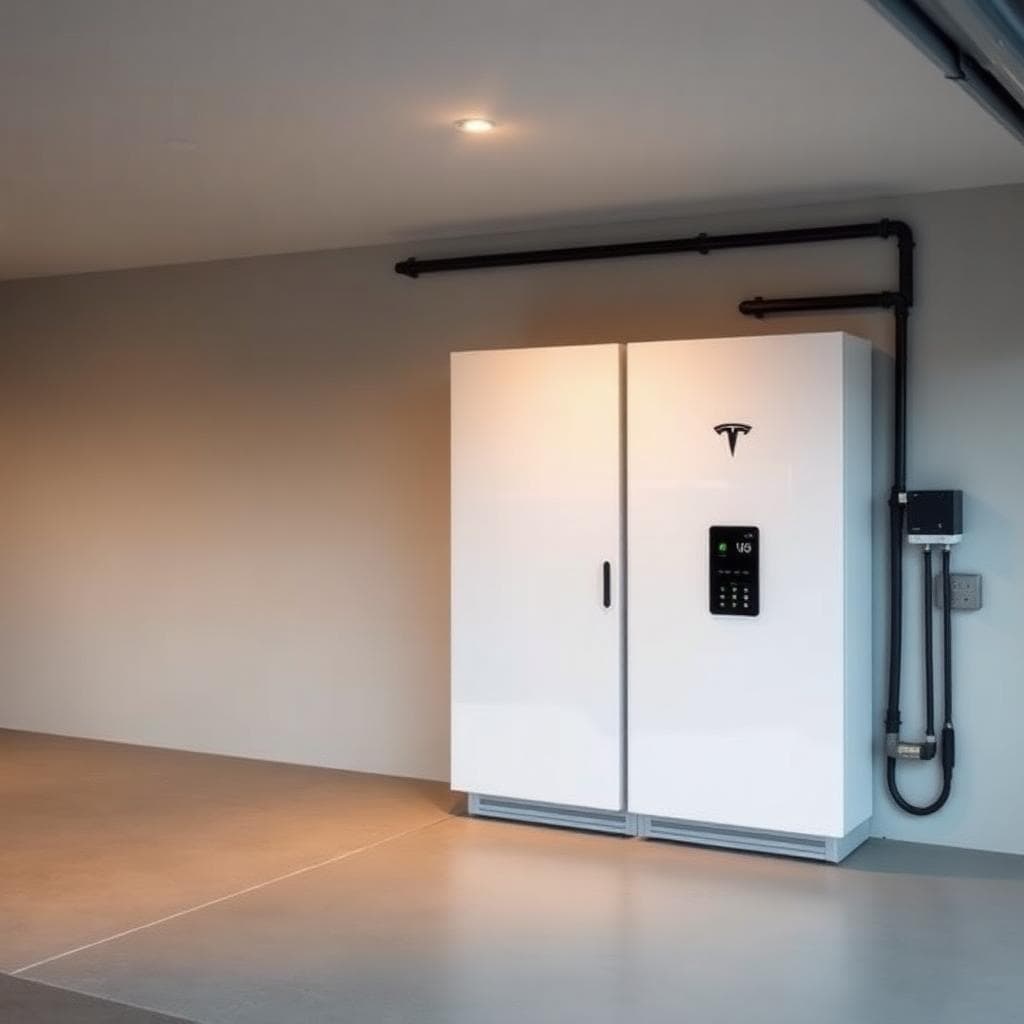
The heart of the system — and its biggest cost. We spec lithium iron phosphate (LFP) storage for 3–7 days of autonomy, sized from your real loads so you’re not dark after two cloudy days.
Inverter & Charge Controller
An off-grid or hybrid inverter plus MPPT charge controllers convert and manage your power. Hybrid units can also accept grid or generator input to top the batteries when the sun doesn’t cooperate.
Backup Generator
A propane or diesel auto-start generator covers extended storms and protects the batteries from deep discharge. On a true off-grid system it’s not optional — it’s the safety net that keeps you powered in January.
Monitoring & Controls
Remote monitoring lets us watch state-of-charge and production and catch a problem before you ever notice it — which matters far more when there’s no utility to fall back on.
Racking & Mounting
Roof-mount or ground-mount, engineered for backcountry wind loads and fire-hardening requirements, and permitted through San Diego County — all handled by our own in-house crew.
Fully Off-Grid or Hybrid?
Here's the honest truth most installers won't tell you: a lot of people who search “off-grid” don't actually need to fully disconnect. There are three paths — we'll help you pick the one that fits your property and budget.
Hybrid (Grid-Tied + Battery)
Best for most homes that still have grid access.
- Keeps your SDG&E connection as backup
- Battery covers evening peaks & outages
- Lowest cost, simplest to permit
- Optimizes savings under NEM 3.0
Partial Off-Grid
Runs independent most of the year, grid as a safety net.
- Solar + battery carries daily loads
- Grid or generator only for edge cases
- Big independence without max battery cost
- Great for high-outage backcountry areas
Fully Off-Grid
No utility connection at all — complete independence.
- 3–7 days of battery autonomy
- Auto-start backup generator included
- Required where there’s no grid service
- No meter, no bill, no rate hikes — ever
Not sure if you need to go fully off-grid or just add battery backup?
Tell us about your property and loads — we'll model off-grid vs. hybrid and show you the honest cost of each.
How Does an Off-Grid Project Actually Work?
Off-grid isn't a kit you buy online and hope works. It's an engineered, permitted build. Here's the four-step process our in-house team has refined over 30 years of San Diego installs.
Site & Load Assessment
We come to the parcel and measure what actually matters: your real electrical loads, sun exposure, roof or ground-mount options, terrain, fire zone, and how far you sit from the nearest grid line. No generic kit math.
System Design & Permitting
We engineer the array, battery bank, inverter, and backup generator to your loads and autonomy goals — then pull the required San Diego County building and electrical permits so the whole system is legal and inspected.
Installation
Our own in-house crew installs the panels, battery bank, inverter, generator, and controls. No subcontractors driving out to the backcountry and disappearing — the team that designs it is the team that builds it.
Commissioning & Monitoring
We test the system under real load, walk you through running it, and set up remote monitoring. You leave knowing exactly how to live with your system — and we’re watching it with you.
What Does Off-Grid Solar Cost?
Off-grid pricing is genuinely custom — it scales with your loads, how many days of backup you want, and your generator. These are honest ballpark ranges to set expectations. Your real number comes after a site and load assessment.
Cabin / ADU / Structure
Stand-alone power for a single structure — a cabin, studio, ADU, shop, or well pump — with essential loads and modest autonomy.
- Right-sized array + LFP battery
- Off-grid or hybrid inverter
- Optional backup generator
- County-permitted & inspected
Whole-Home Off-Grid
A complete off-grid system for a full residence — 3–7 days of battery autonomy plus an auto-start backup generator.
- Winter-sized solar array
- Multi-day LFP battery bank
- Auto-start backup generator
- Remote monitoring included
Estate / High-Autonomy
Large loads, extended autonomy, and redundancy for estates, working properties, or owners who want zero compromises.
- High-capacity battery storage
- Redundant inverters & generator
- Whole-property loads (well, pool, EV)
- Priority service & monitoring
Ranges are illustrative. Every off-grid system is individually engineered and quoted — ask us to compare a full off-grid build against a hybrid system or a utility line extension for your parcel.
Off-Grid Is Unforgiving. Experience Matters.
A grid-tied mistake means a smaller credit on your bill. An off-grid mistake means your family is in the dark with a dead battery bank in the backcountry. That's why off-grid is the wrong place to gamble on a mail-order kit or a subcontracted crew that won't drive back out to fix it.
Where Do We Build Off-Grid Systems Across San Diego County?
Off-grid demand lives in the unincorporated backcountry — the parcels the big installers won't drive to. We will. Tell us your town and we'll tell you what's possible.
What Do San Diego Customers Say?
“They have free coffee and anything you need to do solar or other electrical products at unbeatable prices.”
Sean G.
Google review · 2025
“These guys are awesome! If you need solar I highly recommend them. You will definitely get your money's worth.”
Evan Pantano
Google review · 2019
“We love our solar electricity! Dirk and Brad explained all of our options. They took the time to examine several options and help us design a system that was perfect for us.”
Ione Stiegler
Google review · 2016
Common Questions About Off-Grid Solar in San Diego
Yes, but San Diego County is one of the stricter jurisdictions in California. An off-grid solar system still needs a building permit and an electrical permit, and a fully off-grid dwelling usually also requires septic and well permits. We handle the solar permitting through San Diego County Planning & Development Services so your system is legal, inspected, and insurable — not an unpermitted risk.
A whole-home off-grid system typically runs $45,000–$65,000, with the full range spanning roughly $30,000 to $80,000+ depending on your loads, how many days of battery autonomy you want, and your backup generator. The battery bank is the single biggest cost. Smaller cabin, ADU, or structure systems start lower. Every off-grid system is custom-engineered and quoted after a site and load assessment — there’s no honest one-size price.
For remote parcels, very often yes. Extending a utility line runs about $5–$25 per foot — roughly $15,000–$30,000 for a half-mile and up to about $60,000 per mile — and at the end you still have a monthly SDG&E bill. A complete off-grid system can cost less than that line extension, and you own your power outright. We’ll compare both paths honestly for your specific parcel.
It depends on your daily energy use and how many days of backup you want — most off-grid homes are designed for 3–7 days of autonomy. We size the battery bank from your actual loads, not a generic kit. Undersizing leaves you dark after two cloudy January days; oversizing wastes money. Getting this number right is the most important part of an off-grid design, and it’s where DIY kits most often go wrong.
On a true off-grid system, yes. An auto-start propane or diesel generator covers extended cloudy stretches and storms when solar production is near zero, and it protects your batteries from damaging deep discharge. It’s the safety net that keeps a fully off-grid home reliable through the worst week of winter, and we build it into our off-grid designs by default.
If your property already has grid access, a hybrid system is usually cheaper, simpler, and still gives you battery backup during outages — so most homeowners don’t actually need to fully disconnect. Fully off-grid makes the most sense when there’s no utility service at the parcel or you specifically want total independence. We model both options and show you the real cost and trade-offs before you decide.
Absolutely. Stand-alone structures are one of the most common — and most cost-effective — off-grid projects. We size a system to that structure’s specific loads, whether it’s a weekend cabin, a backyard ADU, a workshop, a gate, or a well pump on a parcel with no service. It’s often the easiest way to power something the grid will never reach.
Yes. We serve the unincorporated San Diego County backcountry, including Julian, Ramona, Alpine, Descanso, Pine Valley, Boulevard, Campo, Jamul, Warner Springs, and the surrounding communities. As a licensed local company with 30 years and 100% in-house crews, we’re set up to design, permit, and service systems out where the national installers won’t drive. Tell us your parcel and we’ll take it from there.
Ready to Go Solar?
Get Your Free Custom Quote.
Save 30–40% with our prepaid lease program. These programs won't last forever.