Roofing Permit for Solar: What Homeowners Must Know
Roofing Permit for Solar: What Homeowners Must Know

A roofing permit for solar is an official approval from your local building authority confirming that your roof modifications for solar panels comply with structural and safety codes before installation begins. Most homeowners are surprised to learn that a solar project requires more than one permit. The building permit covers roof penetrations, flashing, and structural attachments, while a separate electrical permit covers wiring and inverters. Neither permit is optional. Without both, your system cannot legally connect to the grid, and your utility will not authorize power export.
What is a roofing permit for solar and why is it required?
A roofing permit for solar is the structural and building code authorization that governs how solar panels physically attach to your roof. It covers every point where your roof is penetrated, sealed, or modified to support a panel array. Local governments require this permit because a poorly attached solar system can cause leaks, structural damage, or fire hazards that affect your home and your neighbors.
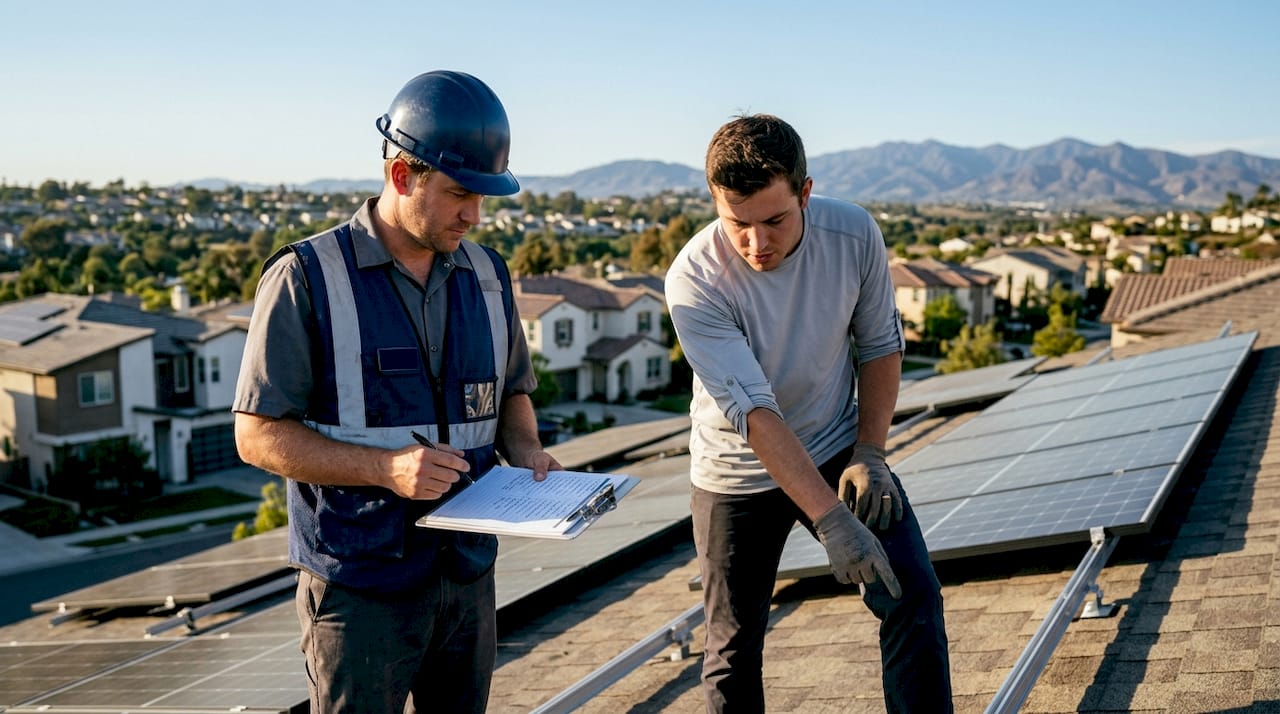
The permit process triggers a formal inspection. An inspector visits your home to verify that the installation matches the approved plans, that flashing is correctly installed, and that the roof structure can bear the added load. Permits and inspections safeguard code compliance and protect the building’s occupants. Skipping this step does not make the risk disappear. It just means no one checked.
Solar installations also cannot supply power to the grid until all permits, inspections, and interconnection approvals are complete. The Department of Energy is direct on this point: grid connection requires completed permits. That means a system installed without permits sits idle, legally speaking, even if it is physically capable of generating power.
Here is what a roofing permit for solar typically covers:
- Roof penetrations: Every lag bolt or anchor point through your roof deck must be documented and sealed with mechanical flashing.
- Waterproofing: Flashing details and weatherproofing methods must meet local building codes to prevent water intrusion.
- Structural load: The permit confirms your roof framing can support the weight of the panel array.
- Engineered mounting systems: Most jurisdictions require manufacturer-approved or engineer-stamped racking systems.
- Roof condition documentation: If your roof is being replaced at the same time, the permit must include documentation of those modifications.
Pro Tip: If you are replacing your roof and adding solar at the same time, treat them as one integrated project from the permit standpoint. Treating solar as an add-on without reviewing roof conditions can cause permit rejection or costly fixes.
How are roof and electrical permits coordinated for solar?
Rooftop solar installations typically require two separate permits: one building permit for the roof and structural work, and one electrical permit for the wiring, inverter, disconnects, and labeling. Each permit has its own application, its own inspector, and its own approval timeline. Both must be closed out before SDG&E or any other utility will authorize interconnection.
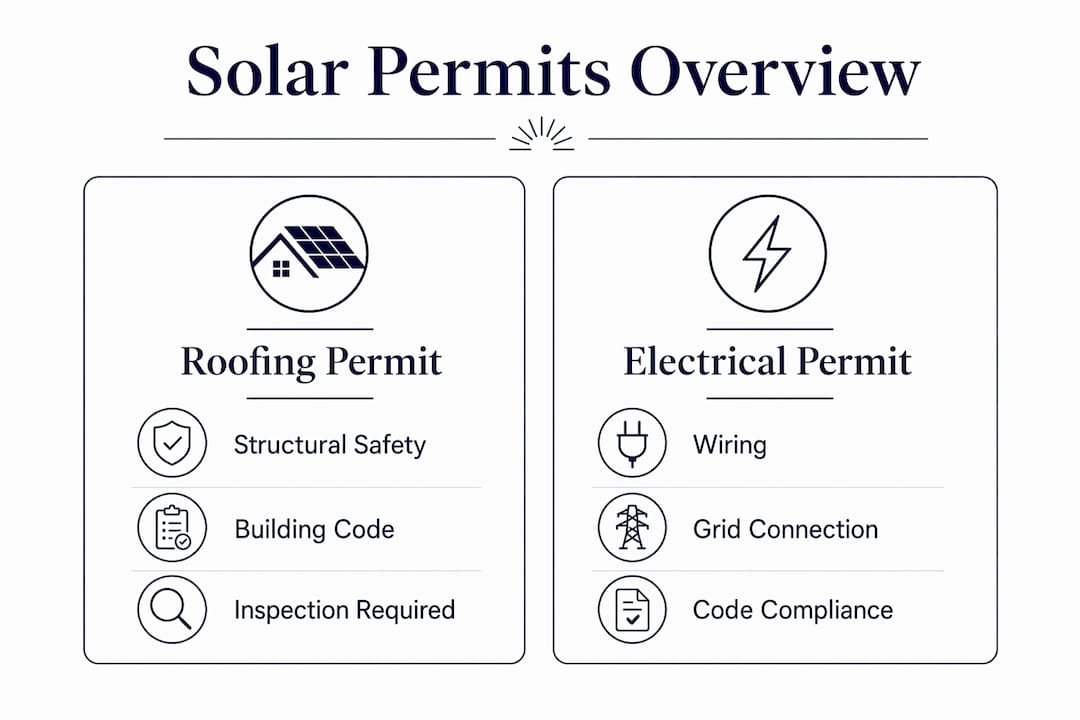
The building permit focuses on the physical attachment of the system to your roof. The electrical permit covers everything from the panels to your main service panel, including conduit routing, inverter placement, and safety disconnects. Enphase Energy notes that licensed professionals handle permit applications because building authorities require certified approval for plans and installations to meet local codes.
The documents required for both permits often overlap. A complete submittal package typically includes:
- Site plan: A scaled drawing showing your home’s footprint, roof layout, and panel placement.
- Structural drawings: Details of the racking system, lag bolt spacing, and roof framing members.
- Electrical schematic: Array wiring, inverter model, disconnect locations, and labeling per NEC requirements.
- Fire safety setbacks: Required clearance paths on the roof for firefighter access, per California Fire Code.
- Manufacturer spec sheets: Data sheets for panels, inverters, and racking confirming code compliance.
Jurisdictional differences matter here. San Diego City, San Diego County unincorporated areas, and individual cities like Carlsbad, Escondido, or Chula Vista each have their own building departments with slightly different submittal requirements. What satisfies one department may need revision for another. Localized research or professional help is the practical solution for homeowners who do not want to learn each city’s quirks from scratch.
Pro Tip: Ask your installer for a permit submittal checklist specific to your city before signing a contract. A contractor who cannot produce one is likely to cause delays.
How do solar permit requirements vary by location and system size?
Solar permitting requirements are not uniform across the country or even within a single county. Some cities use a short form permit process for smaller residential systems, while larger or more complex installations require a long form process with full engineering review. Boston, for example, allows short form permits for systems under 20 kWh on one or two family homes but mandates long form permits for larger systems or multi-family buildings. San Diego jurisdictions follow a similar tiered logic.
System size, roof type, and building occupancy all influence which permit track applies. A standard 8 kW residential system on a single-family home with a composition shingle roof typically follows a simpler path than a 20 kW system on a tile roof over a multi-unit building.
| Factor | Lower complexity | Higher complexity |
|---|---|---|
| System size | Under 10 kW | Over 15 kW |
| Roof type | Composition shingle | Tile or flat membrane |
| Building type | Single-family home | Multi-family or commercial |
| Permit track | Short form or expedited | Long form with engineering review |
| Review time | Days to one week | Two to four weeks |
Common roof information required across most jurisdictions includes roof type and coverings, the location and method of all roof penetrations, mechanical flashing specifications, and the brand and model of the engineered mounting system. Missing or vague roof penetration details are the most common cause of permit corrections and delays. One incomplete line on a submittal can push your project back by weeks.
Automated tools are changing this. SolarAPP+ accelerates permit approvals by checking standardized code requirements automatically, reducing review time and administrative costs. Several California jurisdictions have adopted it. If your city uses SolarAPP+, your installer can often receive same-day permit approval for qualifying systems.
Permitting delays add to solar soft costs, which is why the push for automated permitting matters to homeowners. Every week a permit sits in a review queue is a week your system is not generating power or offsetting your SDG&E bill.
How to get a roofing permit for solar: a practical homeowner guide
Most homeowners never touch a permit application directly. A licensed solar contractor handles the entire process. But knowing the steps protects you from contractors who cut corners or misrepresent timelines.
- System design and engineering: Your installer’s engineering team produces the site plan, structural drawings, and electrical schematic. This package must match your actual roof conditions, not a generic template.
- Permit application submittal: The contractor submits the application to your local building department, along with all required documents. Solar permits require site plans and electrical diagrams including array layout, wiring, inverter specs, disconnects, and labeling.
- Plan review: The building department reviews the submittal for code compliance. This step takes anywhere from one day (with SolarAPP+) to several weeks depending on your jurisdiction and the completeness of your application.
- Permit issuance: Once approved, the permit is issued and installation can begin. No work should start before this step.
- Installation: Your crew installs the system according to the approved plans. Any deviation from the approved drawings requires a plan revision and re-approval.
- Inspection: A city inspector visits to verify the installation matches the permit. Roof attachment, flashing, wiring, and labeling are all checked. For solar plus roof replacement projects, the inspector also reviews the roofing work.
- Permit closeout and interconnection: Once the inspection passes, the permit is closed. Your contractor then submits the interconnection application to SDG&E. The utility conducts its own review before authorizing the system to operate.
Understanding roof clearance requirements before the permit process begins can prevent last-minute redesigns that delay approval. Fire code setbacks, ridge clearances, and hip clearances are fixed by California law and cannot be negotiated away.
Key Takeaways
A roofing permit for solar is a non-negotiable structural approval that must be completed, inspected, and closed before your system can legally connect to the grid.
| Point | Details |
|---|---|
| Two permits required | Most solar projects need both a building permit and an electrical permit before grid connection. |
| Roof penetration details matter | Vague or missing flashing details are the top cause of permit corrections and project delays. |
| Requirements vary by location | System size, roof type, and city jurisdiction determine whether you follow a short form or long form permit process. |
| Automated tools speed approvals | SolarAPP+ and similar platforms can reduce permit review to a single day for qualifying systems. |
| Licensed contractors reduce risk | A licensed solar contractor handles submittals, inspections, and interconnection, protecting you from costly mistakes. |
What 30 years of pulling permits taught me about solar approvals
I have seen homeowners lose weeks, sometimes months, because their contractor submitted incomplete plans. The most common mistake is not a technical error. It is a documentation error. A missing flashing detail, an unlabeled disconnect, a structural drawing that does not match the actual roof pitch. These are fixable problems that should never reach the permit desk in the first place.
The second thing I have learned is that homeowners who understand the permit process get better outcomes. Not because they do the work themselves, but because they ask better questions. When you know that a permit requires engineered mounting specs and fire safety setbacks, you can ask your contractor to show you those documents before submittal. That one question filters out a lot of bad actors.
Permit timelines are also more predictable than most contractors admit. If your city uses SolarAPP+, a clean submittal gets approved the same day. If it does not, plan for one to three weeks. Any contractor who promises a permit in 24 hours without knowing your jurisdiction is guessing. Any contractor who says permits are not your concern is hiding something.
The permit process exists because rooftop solar is a permanent structural modification to your home. Flashing fails. Roofs leak. Structures fail under unexpected loads. The permit and inspection process is the mechanism that catches those problems before they become your problem. Embrace it, not as a bureaucratic hurdle, but as the quality check it is designed to be.
— Curtis Williamson
San Diego Solar handles every permit, every time
San Diego Solar has managed the full permit process for thousands of residential solar installations across San Diego County since 1996. The company pulled the first commercial solar permit in the City of San Diego and has never used a subcontractor in 30 years of business. Every submittal is prepared by an in-house engineering team that knows the specific requirements of each local building department, from Oceanside to Chula Vista.

San Diego Solar handles the building permit, electrical permit, SDG&E interconnection, and HOA approvals as part of every installation. Homeowners receive a written project timeline before committing. For a custom residential solar system designed around your roof, your energy usage, and your local permit requirements, contact San Diego Solar for a free consultation.
FAQ
What is a roofing permit for solar?
A roofing permit for solar is a building or structural permit issued by your local government that confirms roof penetrations, flashing, and panel attachments meet safety and building codes before installation and grid connection.
Do I need separate permits for solar panels and electrical work?
Yes. Most solar installations require two permits: one building permit for the roof and structural work, and one electrical permit covering wiring, the inverter, and disconnects.
Can I install solar panels without a permit?
No. Solar installations that skip permits cannot legally connect to the grid, and utilities like SDG&E will not authorize power export until all permits and inspections are complete.
How long does it take to get a solar roofing permit?
Timelines vary by jurisdiction. Cities using automated tools like SolarAPP+ can approve qualifying permits in one day. Traditional plan review typically takes one to three weeks, depending on submittal completeness and department workload.
Who applies for the solar permit, the homeowner or the contractor?
A licensed solar contractor typically applies for the permit on your behalf. Most building authorities require certified professional approval for solar plans, and a licensed contractor’s submittal moves through review faster than a homeowner’s.